Online course by HryMa (Hrytsaienko Maryna)
Access opens 14 days after payment
Vivid colors in acrylic
Your colors turn dull and muddy no matter how much you mix. Let’s make your flowers as vivid as you imagined.
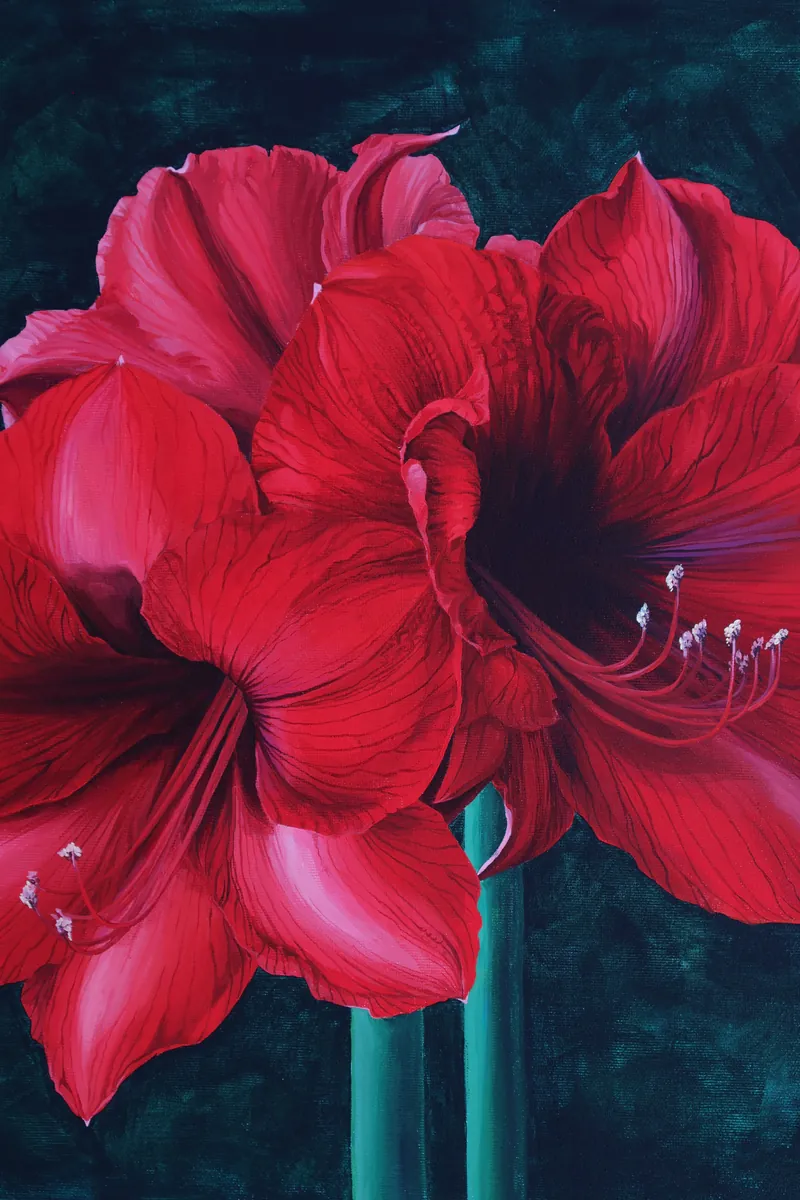
No more unfinished paintings or colors that clash. In 7 short video lessons, paint a vivid red amaryllis with me, layer by layer, and understand every step. Get your confidence back and enjoy the process again.
$39$19
P.S. Full refund before your access opens, and for 14 days after.
- Choose your colors without hesitation, so they work together
- Keep your colors bright and clean, even when you add white
- Know what each layer is for, so the messy middle no longer stops you
- Finish a painting you’re proud to show
Does this sound familiar?
You’re not alone. I’ve been there too.
-
You add white, and the color dies
You spend hours on a vivid flower. It looks too dark, so you add white, and it turns chalky. You add more color, but the glow you imagined never comes back. Layer after layer, the paint gets thicker, and you get more and more frustrated. Maybe I’m just not good at this.
-
Every part looks fine, but nothing fits together
You paint a leaf, and it looks good. Then another one. Not bad either. Each part looks fine on its own, but together they look like pieces of different paintings. And you’re still guessing which color goes where.
-
The canvas ends up in a corner
You start a painting full of excitement, but halfway through the colors go wrong and you lose heart. Too embarrassing to give away, too much work to throw out. So it just sits there.
-
Tutorials help once, then stop working
You’ve watched dozens of free videos and own more tubes than you’ll ever use. But the next painting still goes wrong, because you copied the steps without understanding why they work.
One method. One flower. Every color problem solved.
How this course fixes what tutorials never could
Understand the cause, not just the symptom
Instead of another tip to try, you get one clear explanation of what really happens between light, paint and your eye. Once you understand the cause, the fix is obvious — and it works on every painting after this one.
Follow one layer-by-layer plan
Seven lessons, one amaryllis, one complete method from blank canvas to finished painting. Each layer has a single job. You always know what you're doing and why — no guessing, no repainting from scratch.
Walk away with a method you can repeat
By the end you'll have a finished vivid red amaryllis — and the understanding to use the same method on any flower, any color, on your own. No more depending on someone else's palette or someone else's steps.
What's included
-
01
Know Your Paints swatch cards
Printable cards — one for each paint you own. Lay them side by side and see at once which colors work together and which will cause mud. Plus a one-page guide on how to read a paint label so you know exactly what's in every tube.
-
02
Printable amaryllis outline
Not confident with drawing? Transfer the outline of the amaryllis onto your canvas and go straight to painting. It’s not cheating. It’s a tool that lets you focus on what really matters here: color.
⏱ Early access price ends in
Then the price goes up to $39

Hrytsaienko Maryna
Contemporary flower painter in acrylic with PhD in Physics
- Self-taught flower painter
- Full-time artist for 2 years
- Commissions and exhibitions, paintings shipped worldwide
- PhD in physics, 5 years in scientific research
People look at my flowers and say:






It’s acrylic.
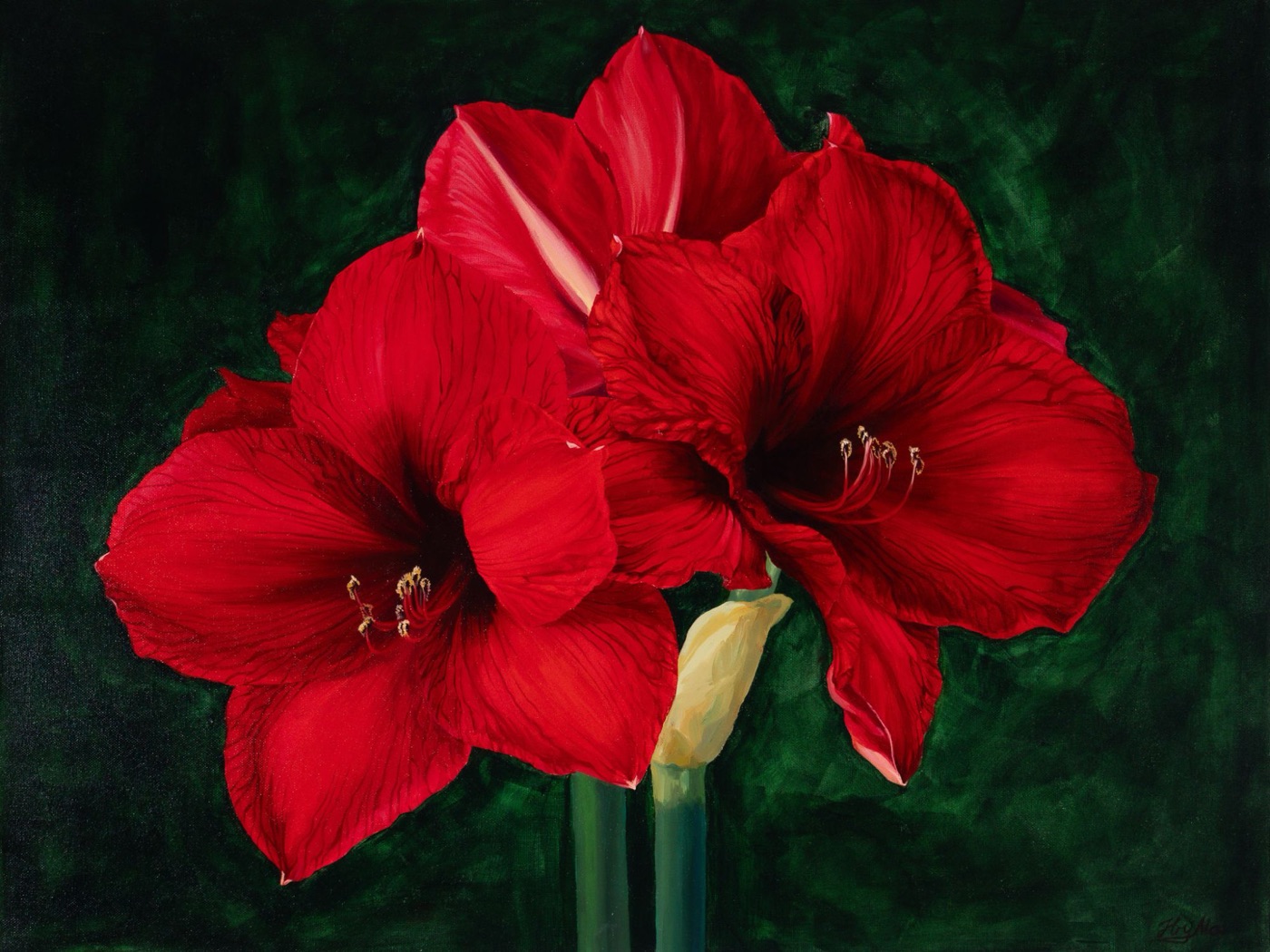
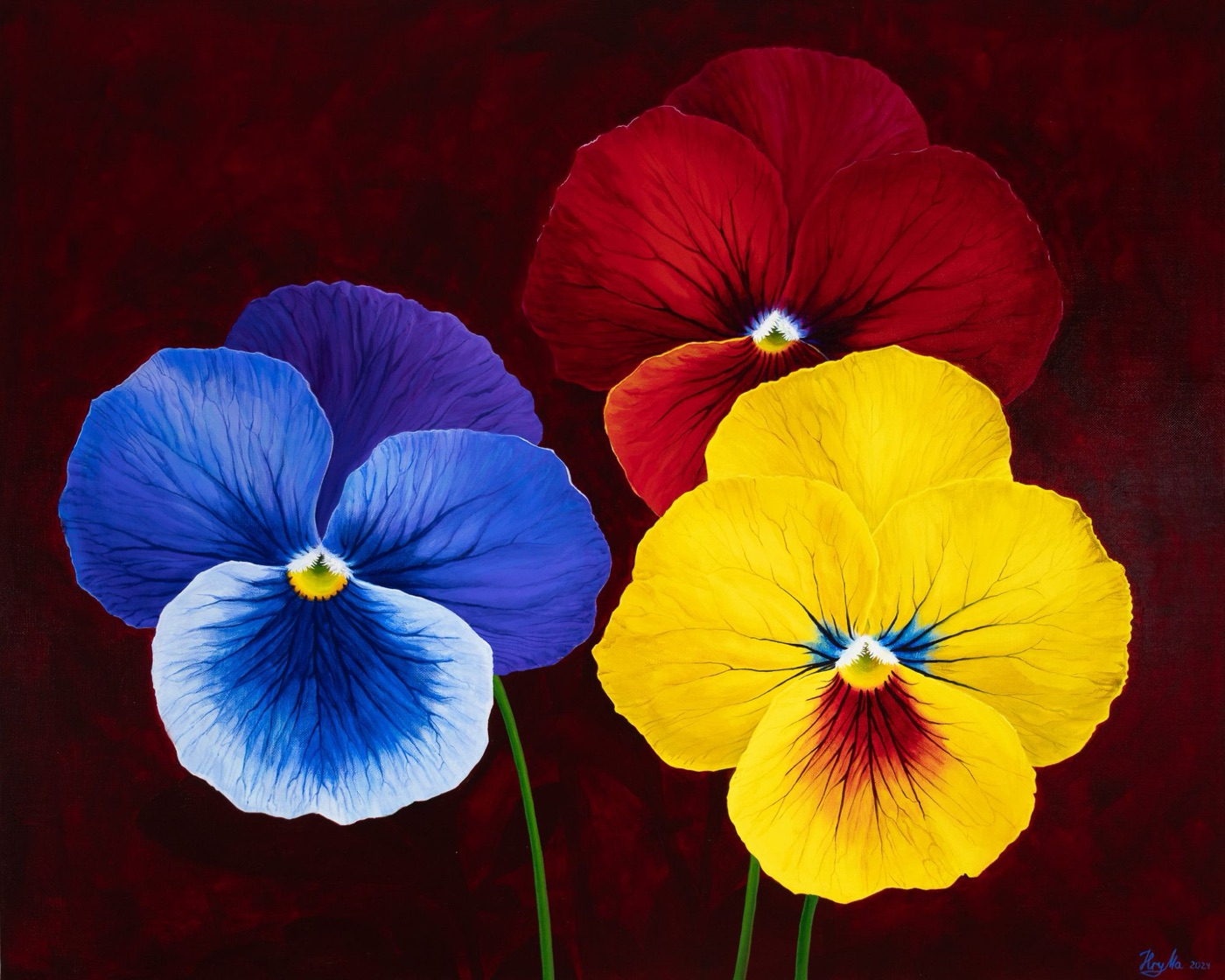
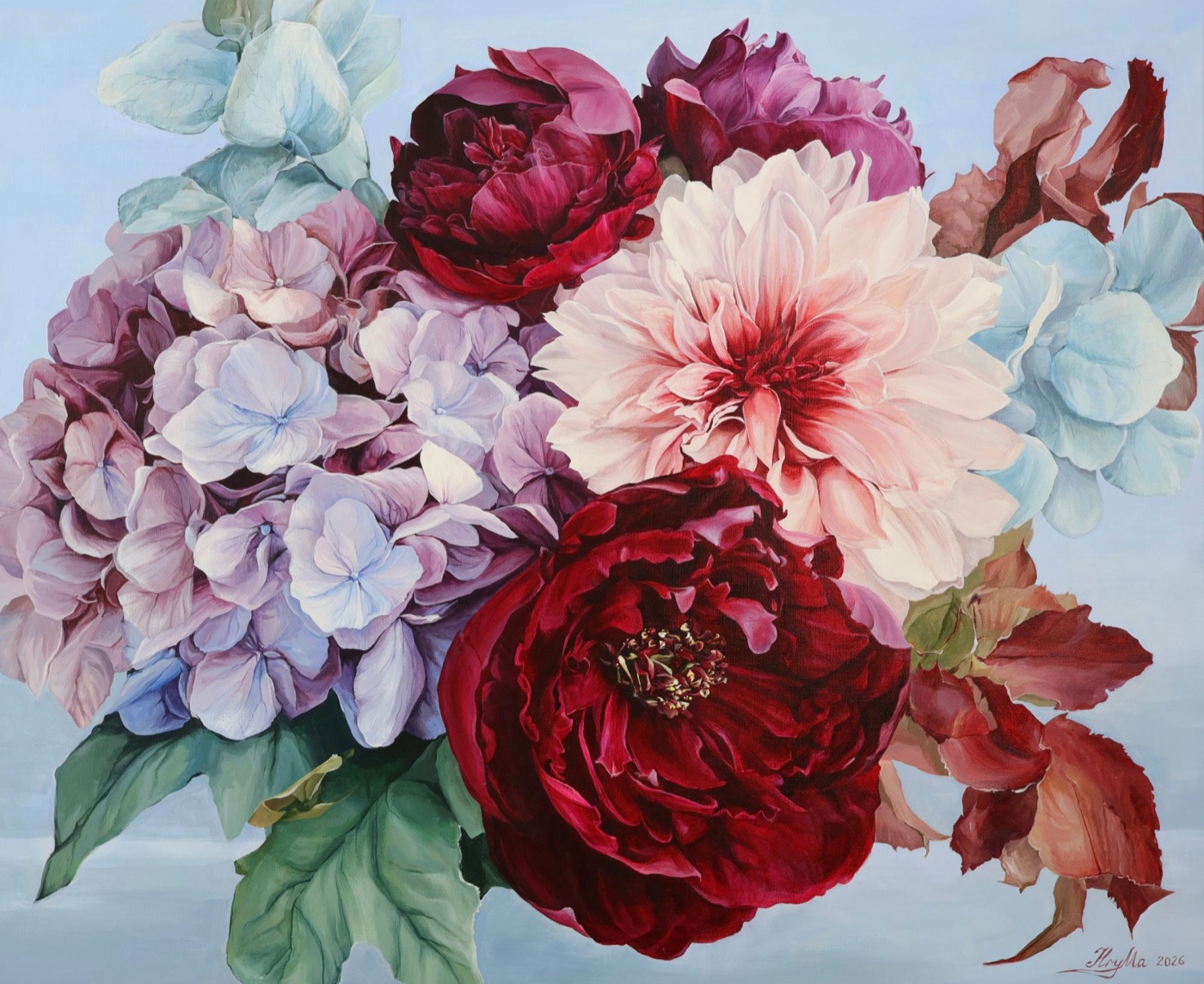
I’m a self-taught flower painter with a PhD in physics. After 15 years in science, I picked up a brush and did what scientists do: I treated color as a problem to solve. I tested light, paint and the eye, painting after painting, until I understood exactly why colors go chalky and muddy, and how to stop it. I’ve now been a full-time artist for 2 years.
In this course, I’ll show you that method step by step, in plain English, so you don’t have to spend years finding it on your own.
Course curriculum
- 1
Reference and Composition
Your amaryllis is sketched on the canvas, well placed, and you know where everything goes.
- 2
Palette and Light
You know how light changes the colors you see, and you have a small palette where every color belongs and works together.
- 3
The Color Sketch
Your first colors are on the canvas, and you can already see they work together.
- 4
The Solid Layer
Your petals are smooth and solid, with no see-through patches.
- 5
Red That Stays Red
Your red is bright, clean and vivid, and you know how to keep it that way.
- 6
Details and the Heart of the Flower
Your flower has its fine details and a center that makes it feel alive.
- 7
Bringing It Together
Your amaryllis is finished: whole, full of volume and vivid.
How the course works
- 1
Pay once, get instant access
After payment, you receive access 14 days later to all 7 video lessons, the reference photo, the printable outline, the full materials list, and the Know Your Paints bonus.
- 2
Watch at your own pace
Each lesson is 15–30 minutes. You can watch on your phone, tablet or computer, pause whenever you need to pick up a brush, and come back as many times as you like. You have 1 year of access.
- 3
Paint step by step
Follow one clear method on one flower. Each lesson ends with a clear action and knowledge. No guessing what to do next.
- 4
Finish with a painting and a method
By the end you'll have a finished vivid red amaryllis and the understanding to repeat the same method on any flower, any color, on your own.
What changes after 7 lessons
- A finished acrylic painting of a vivid red amaryllis — bright, clean, no chalky pink, no mud, no see-through patches
- A set of Know Your Paints swatch cards for every paint you already own
- One clear layer-by-layer method you can repeat on any flower and any color
- The understanding of why colors go muddy — so you can fix the cause, not just the symptom
And most of all, you’ll sit down to paint with joy instead of hesitation. When an idea comes, you won’t push it away with “I don’t know how to do this.” You’ll know where to start, which colors to use and what comes next, so you can enjoy every brushstroke and feel free to express yourself on the canvas.
Risk-free guarantee
Full refund any time before your access opens. If you open the course and it’s not what you expected, you’ll get a full refund within 14 days of opening, no questions asked.
Full details in the Refund Policy.
Your questions answered
What if it just doesn't work for me — maybe I'm not good with color?
Color isn't a talent you're born with — it's something you understand or you don't yet. This course explains exactly what happens between light, paint and your eye, step by step. If you can follow a recipe, you can follow this method. And if after 14 days you feel it's not working for you, you get a full refund.
What if it's too complicated? Do I need to know color theory?
No. There's no color wheel and no jargon. I explain what happens between light, paint and your eye in plain English, and that's all you need.
Is this course for complete beginners?
It’s for painters at any level, professional or hobby, who already have some experience with acrylic. If you have a few acrylic paintings behind you and know how the paint behaves, you’re ready. You’ll get a printable outline of the amaryllis, and I cover the basics you need along the way, briefly and only what matters for color.
Do I need to be good at drawing?
No. This isn't a drawing course. In Lesson 1, I share the key points of the composition, using the reference photo: where to place the flower, how to keep the proportions and how to handle the edges. And if you'd rather skip the drawing, you get a printable outline of the amaryllis to transfer onto your canvas.
What if my paints aren't good enough and I need to buy a new set?
You don't need new paints. The course is built around the paints you already own. The Know Your Paints bonus helps you understand exactly what you have, so you can choose the right ones for this painting — and stop buying tubes you don't need.
How is this different from free YouTube tutorials?
On YouTube, the answers are scattered: one tip here, another there, buried in long talks about color wheels and paint brands. You watch for hours and still don't know why your colors go chalky or muddy. I teach it as a physicist. Instead of fixing the symptoms, I show you where the problem comes from, in plain English, with no formulas. Then what to do and what not to do, step by step, on a real painting. You get only what you need for vivid, harmonious color. And once you know the source, it works on any flower, in any color.
Does it work for other flowers and colors?
Yes. You'll learn the method on red, one of the hardest colors to keep vivid. Once your red works, the same steps work for any flower and any color.
Is this a one-time payment?
Yes. One payment, no subscription, no hidden costs.